“Once you are part of AIMS, your life changes. You realise you are part of something bigger.”
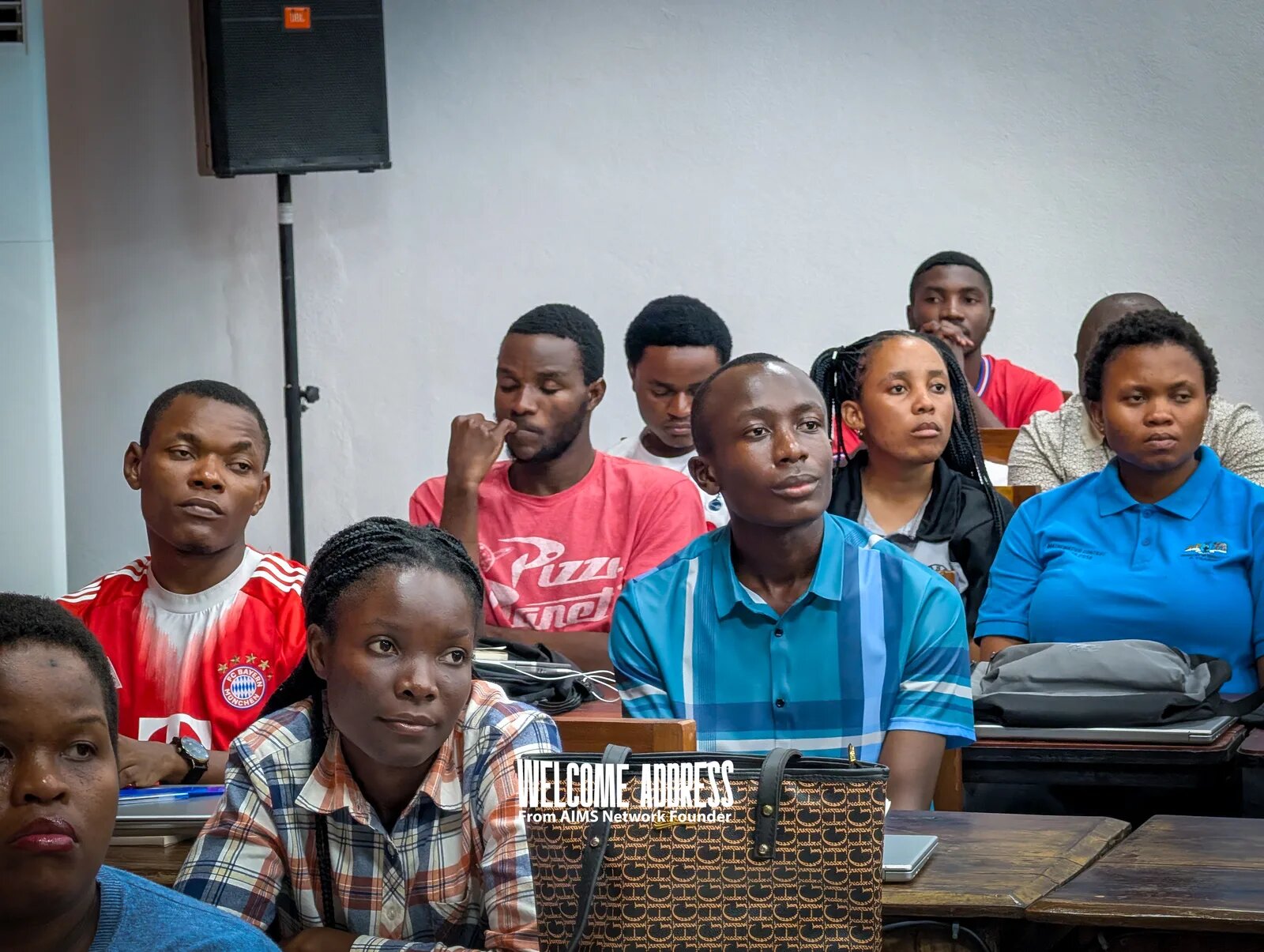
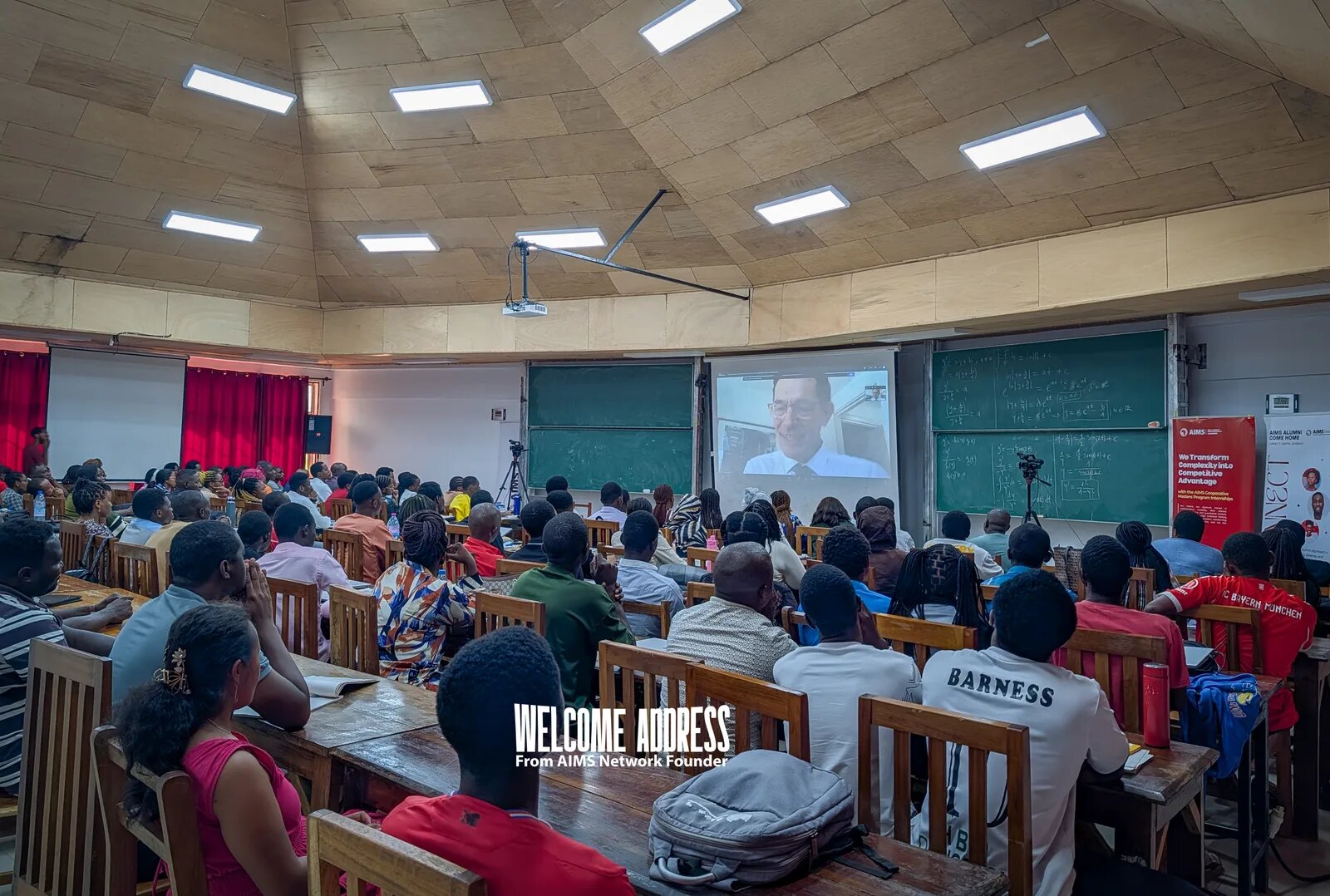
The Welcome Address, moderated by Prof. Foupouagnigni, brought together Prof. Turok and students for an exchange that covered AIMS’ history and expansion, artificial intelligence, scientific research, theoretical physics and the role of young African scientists.
AIMS and Africa’s Scientific Future
Founded in 2003 with its first centre in South Africa, AIMS was established with the ambition of rethinking university education through excellence in the mathematical sciences and the development of Africa’s next generation of scientific leaders.
Prof. Turok encouraged the new cohort to look beyond individual academic achievement and recognise their place within a wider Pan-African network of students, researchers, lecturers and alumni.
He highlighted Africa’s rapidly growing young population, noting that by 2030, around 40% of the world’s population under the age of 25 is expected to be African.
For him, this demographic reality creates both an opportunity and a responsibility for young scientists.
“The future of science is in Africa’s youth.”
Prof. Turok called on students to develop strong scientific foundations, share their knowledge and consider careers as researchers and lecturers in African institutions. He also encouraged them to help train the generations that will follow.
AIMS Expands Across the Continent
The address also highlighted the continued expansion of the AIMS network.
Prof. Turok outlined plans for additional AIMS centres in Kenya, the Democratic Republic of the Congo and The Gambia, as the network works towards a long-term goal of 15 centres across Africa.
With approximately 4,500 alumni worldwide, AIMS has developed a growing community of scientists and mathematical scientists working across Africa and internationally.
Prof. Turok challenged students to consider how they could contribute to this expansion, whether by helping establish new centres, strengthening existing programmes or creating collaborations across the network.
AI Is Changing Science, and Mathematics Is at the Centre
Artificial intelligence featured prominently in Prof. Turok’s address.
He told students that they had entered AIMS at a pivotal moment as AI increasingly influences mathematics, scientific research and academic publishing.
He pointed to the growing volume of AI-generated research papers as one example of the challenges facing the scientific community.
For AIMS students, he argued, a strong foundation in mathematics provides an important basis for understanding and critically engaging with these developments.
Rather than relying on memorisation, Prof. Turok encouraged students to master fundamental concepts deeply.
He suggested that genuine creativity emerges from this foundation, allowing researchers to recognise connections and develop new ideas after years of preparation.
He also encouraged students to remain curious about developments in science beyond the classroom, recommending outlets such as Quanta Magazine as one way of following contemporary research.
Finding Research Questions That Matter
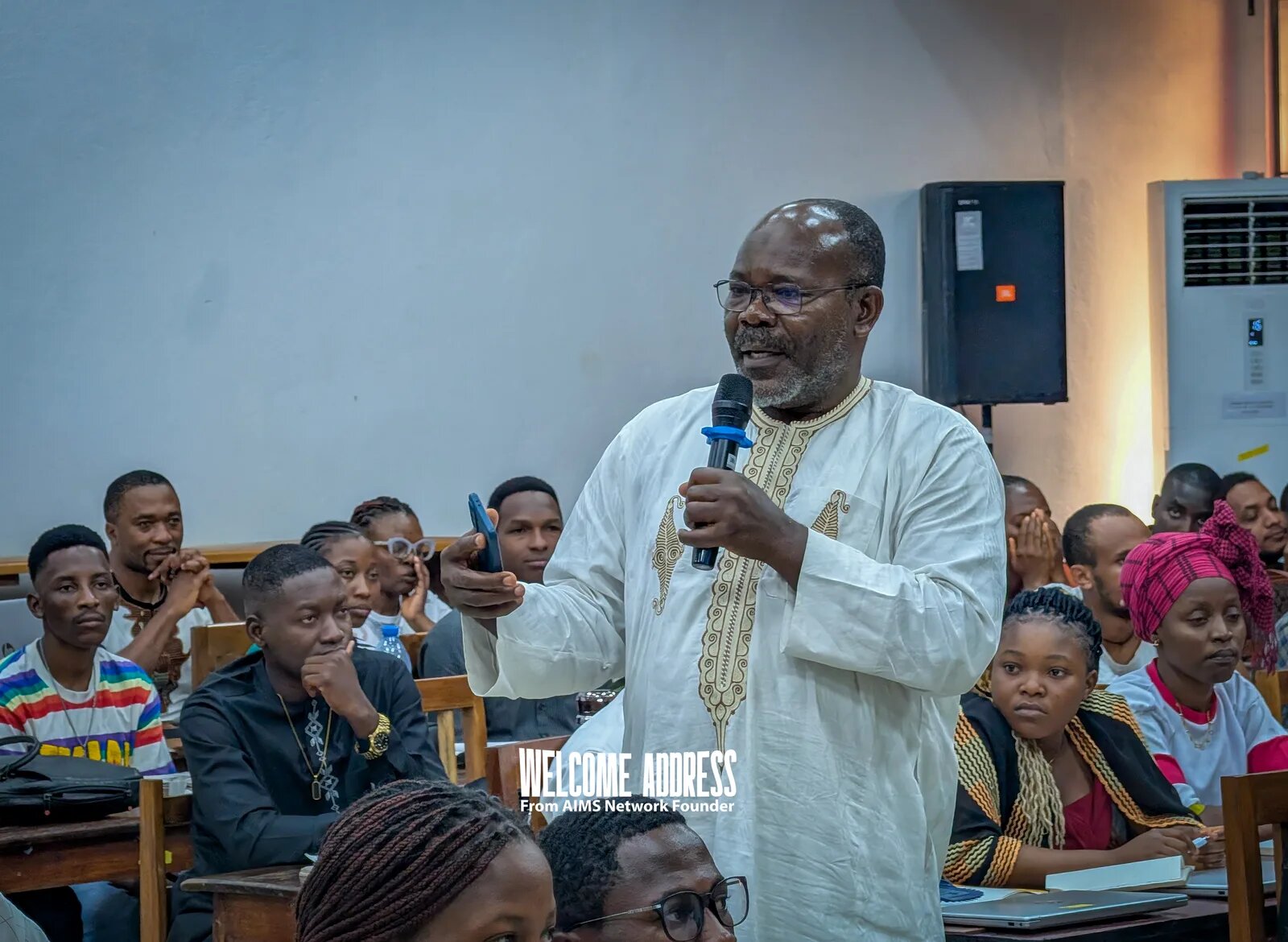
Questions from students also turned to research and theoretical physics.
Prof. Turok expressed reservations about several influential research programmes in theoretical physics, including string theory, loop quantum gravity and AdS/CFT, pointing to the absence of successful experimental predictions as a concern.
He encouraged students to explore questions connected to observable phenomena, particularly in areas such as cosmology and dark energy.
The discussion also resulted in a concrete proposal: the creation of a cross-centre theoretical physics discussion group connecting students from AIMS centres across Africa.
Prof. Turok offered to help facilitate the initiative, which could provide a platform for students to exchange ideas, discuss research questions and develop collaborations.
“Collaboration, not competition” was a recurring theme in the vision of AIMS presented during the session.
Science and Africa’s Development
Prof. Turok also urged students to consider how scientific knowledge can contribute to addressing challenges facing African societies.
Among the issues highlighted were poverty, malnutrition, disease, energy shortages and soil erosion.
He encouraged students to follow their interests while also considering areas in which their understanding of African contexts could provide valuable perspectives.
Environmental protection and the modelling of refugee movements were among the examples discussed.
But scientific expertise, he argued, should be accompanied by wisdom and responsibility. He pointed to Nelson Mandela as an example of the combination of intelligence, wisdom and courage.
Why Invest in Africa?
During the open-floor discussion, Prof. Turok reflected on his personal connection to Africa and his motivation for supporting scientific education on the continent.
Growing up in South Africa as the child of anti-apartheid activists who were imprisoned for their beliefs, he said, shaped his understanding of Africa’s potential and reinforced his belief in the continent’s scientific talent.
His message to the new cohort was clear: creating opportunities for talented young Africans is central to building a stronger scientific ecosystem on the continent.
Reimagining the University
Prof. Turok also returned to the founding philosophy of AIMS: to reinvent the university.
He described a model centred on collaboration, discovery, practical impact and the broad sharing of knowledge.
Students were encouraged to approach their ideas entrepreneurially: developing clear plans, identifying opportunities and seeking funding to turn promising ideas into action.
AIMS-Cameroon also offers short-term visiting fellowships, including opportunities for researchers working in areas such as machine learning, providing further avenues for scientific exchange.